Vol. 1 Chapter 1.5 – Late May, 1565
by PinkPantherTwo months had passed since Shizuko arrived in the village.
The seasons were gradually shifting from spring to summer, and the weather had been sunny day after day.
With conditions like these, there was little to do besides pulling weeds and watering the crops as needed.
However, despite this being a period when she should have been able to take things easy, Shizuko let out a heavy sigh, her shoulders drooping.
That was because a certain problem had come to light.
“Haaah…What should I do about pest animal control…?”
The problem was wild animals damaging the crops. Even in Shizuko’s original era, certain regions suffered severe losses from such animals.
The financial damage could reach tens of millions of yen, and in some cases, farmers could lose almost their entire harvest. However, the greatest problem was the resulting decline in farmers’ motivation.
During the Sengoku period, a decline in farmers’ willingness to cultivate their fields could become a matter of life and death.
“I wonder what kind of countermeasures would be effective…”
At present, the damage was not particularly severe but it was certain to reach dangerous levels by the time summer arrived.
There was little point in growing large quantities of crops if wild animals ended up eating everything.
“Osora-san, Tagosaku-san, could you tell me everything you know about the animals damaging our crops?”
Shizuko called out to two nearby villagers who were pulling weeds, a woman named Osora and a man named Tagosaku.
The man appeared completely absorbed in his weeding, but the woman noticed Shizuko calling to them.
“Well, more than anything, there are an awful lot of deer around here. We used to have foxes and weasels too, but…perhaps because the deer have multiplied so much, we haven’t seen them lately. There are still a few wild boars, though…”
“Hmm, deer, huh…”
For farmers of that era, the four main types of animals considered agricultural pests were deer, wild boars, foxes and weasels.
Of these, deer were by far the worst. They reproduced rapidly and possessed the troublesome tendency to become nocturnal during the hunting season.
They consistently occupied the top spot when it came to agricultural damage caused by wild animals.
‘From what she’s saying, there’s practically no damage from other animals… Or rather, have the deer taken over the entire surrounding area, making it difficult for other animals to live here?’
The absence of foxes and weasels made things easier, since she would not have to devise additional countermeasures against them. However, that meant everything depended on how many deer they could capture.
‘In modern times, even disposing of a deer requires troublesome procedures but in this era, they’re an important source of protein. If there are so many of them, it would probably be better to capture as many as possible, make dried meat and use that to stave off starvation.’
The sweet potatoes would not be ready until the end of September at the earliest. Until then, they needed to secure some means of keeping hunger at bay.
Shizuko regularly received food provisions because she was, after all, a subordinate of Mori Yoshinari. The villagers, however, did not enjoy the same privilege.
If deer were so abundant, there was no reason not to make use of them as a food source.
‘Once we have the sweet potatoes, we’ll be able to secure a sufficient food supply. Until then, we’ll have to obtain meat from wild boars and deer…But the problem is how we’re going to do that…’
This was not an era in which hunting rifles could be obtained easily. Moreover, firearms themselves were expensive commodities (costing roughly 500,000 yen in modern terms).
Above all, the gunpowder needed to fire them was a precious resource, making it impractical to hunt deer using firearms.
‘Naturally occurring saltpeter isn’t available in Japan, either… Huh? Wait a minute…’
At that moment, something suddenly caught Shizuko’s attention in the depths of her memory.
She immediately began searching through her recollections, until she remembered a particularly important piece of information.
‘Hmm…I could probably ask Mori-sama to procure the materials for me… But it’s not something I can openly discuss, either. It’ll probably take several months to get everything prepared and lay the groundwork. Still, better safe than sorry, so I suppose I should go ahead with it, just in case. Well, putting that aside… I still can’t think of a good way to deal with the deer.’
Although Shizuko had come up with another idea while her thoughts wandered off on a tangent, she still had no solution to the actual problem of protecting the crops from wild animals.
‘The reason the deer have multiplied so much is that there aren’t any carnivorous predators to keep their numbers in check. In that case, perhaps I could introduce some wolves into the area…? No, that won’t work. There’s no guarantee they’d settle here and more importantly, that would take far too long.’
In modern Japan, one reason deer and wild boar populations had proliferated was the extinction of their natural predator, the Japanese wolf.
However, there was a possibility that Japanese wolves still survived during the Sengoku period. After all, historical records indicated that Siebold had kept both wolves and yamainu (mountain dogs) in captivity during the Edo period.
‘That means setting traps would be the quickest solution… But unlike birds, keeping deer out with nets would be difficult…’
She glanced upward and saw netting stretching across her entire field of vision.
As a countermeasure against birds and other wildlife, the entire farm had been covered with simple nets woven from straw.
Although constructing them had taken nearly a month, they had successfully prevented most of the damage caused by birds.
‘What if I just create something like a gate, with a passageway to lure them…through…!?’
At that instant, Shizuko recalled a conversation she had once had with her grandfather while discussing ways to deal with deer.
Her grandfather had mentioned a crucial piece of information back then, something that could be put to good use even during the Sengoku period.
“That’s it…! I just need to create a passage that deer, being even-toed ungulates, absolutely cannot cross!”
“Whoa! You startled me!”
Tagosaku jumped in surprise when Shizuko suddenly shouted.
Osora, who was standing a short distance away, was not quite as startled but Shizuko’s sudden outburst had surprised her nonetheless.
『Hey, Osora-san, do you think the village chief has come up with another one of her bizarre ideas?』
Tagosaku moved closer to Osora and whispered into her ear.
『Probably. But our village chief really is knowledgeable, isn’t she? I don’t know how she manages to come up with so many ideas.』
『That’s true… I didn’t understand what she was doing at first but once we actually tried her methods, I finally understood how effective they were.』
『Judging by what she was saying, perhaps she’s thought of some way to deal with the deer? Well, I suppose those fellows will be worked to the bone again. Poor things.』
『I suppose so…』
Watching Shizuko crouch down and begin drawing something on the ground, the two villagers could almost hear the construction team’s screams already.
They would later discover that their premonition had been right on the mark.
A little over a week after Shizuko came up with her idea, strange contraptions began appearing all around the farm, packed into every available space.
The villagers, who had yet to receive a detailed explanation, had absolutely no idea what they were supposed to be.
However, since Shizuko’s methods had proven successful thus far, they were somewhat optimistic that things would work out this time as well.
“Mm-hmm, perfect! Steel-jaw traps and Texas gates.
Carrying something resembling a long pole over her shoulder, Shizuko nodded in satisfaction as she examined the contraptions before her.
Considering they had been built in a hurry, she thought they had turned out remarkably well. Of course, since she planned to expand the farm next year, these installations were only intended to last for the current year.
“Steel-jaw traps would be illegal in modern Japan but there’s no problem using them in this era.”
As she spoke, Shizuko swung the pole-like object in her hand.
It was a wooden staff approximately one meter long, with a notch cut into its tip.
A cord was attached near the tip, with a broad section designed to cradle a stone. The opposite end of the cord, however, was left unsecured.
Judging by its construction, that loose end was apparently meant to be hooked into the notch.
“And with this staff sling, we’ll finally have a means of attacking from a distance! Normally, a simple sling would be enough but using the principle of leverage increases both its range and power, so this version is better. Besides, in the worst-case scenario, it can even double as a makeshift spear!”
A staff sling.
It was a staff sling measuring approximately one meter in total length, weighing between 300 and 500 grams, and boasting an effective range of around 100 to 150 meters.
A weapon that had been used from the fourth century BCE all the way into the modern era, its greatest advantage was its impressive range, which rivaled that of a bow.
On the other hand, its disadvantages were that it took some time to launch a projectile and was poorly suited to rapid successive attacks.
Shizuko had also attached a slightly pointed iron fitting to the butt end of the staff.
This helped stabilize its center of gravity and protected the shaft when it was thrust into the ground.
Although the fitting was nowhere near as sharp as a blade, it still possessed enough striking power that being stabbed with it would result in far more than a little pain.
“Um, Village Chief. I haven’t the faintest idea what you’re talking about, but what exactly are we supposed to do now…?”
“Shh. I’m about to show you just how effective those traps are.”
“Uh… right…”
Shizuko and several villagers were hiding in a thicket downwind of the farm.
However, apart from Shizuko, none of them understood either the purpose of hiding there or the significance of the traps.
‘Seeing is believing. With things like this, it’s quicker to show them how effective it is than to explain everything.’
About thirty minutes after that thought crossed her mind, deer began appearing here and there.
They seemed to have descended from the mountains, and there were approximately nine of them altogether.
“Three…four…The ones with the large antlers are males, so we can assume four are males and the remaining five are females.”
“That’s an awful lot of them…”
Perhaps because they had never seen so many deer gathered in one place before, the villagers appeared somewhat frightened.
Was there something about a herd that instinctively inspired fear in humans?
While Shizuko was pondering that question, one of the deer began heading straight toward a Texas gate.
“Oh, just a little farther…There, everyone. Watch closely. That’s what the trap does.”
The deer continued walking directly toward the Texas gate.
However, after taking several steps, it found itself completely immobilized.
Unable to move either forward or backward, the deer let out a cry.
“Ooooh!”
The villagers exclaimed in admiration.
The deer caught in the Texas gate could neither advance nor retreat.
Moreover, the immobilized deer was blocking the passage, preventing the deer following behind it from moving forward.
“One source of protein is secured. Now then, let’s see if another one gets caught in a steel-jaw trap.”
The instant she muttered those words, a deer’s agonized cry rang out across the surrounding area.
The cry was so loud that the other deer immediately fled back in the direction they had come from.
Looking toward the source of the sound, Shizuko saw that one of the deer had caught its leg in a steel-jaw trap.
“Two deer, huh… Not bad at all.”
Satisfied with the promising results, Shizuko murmured approvingly.
Both captured deer were still alive, but Shizuko considered that perfectly acceptable.
Unless wild animals were processed promptly, their meat would develop a distinctive gamey odor.
One deer was trapped in the Texas gate, unable to move but otherwise unharmed, while the other had injured its leg in the steel-jaw trap.
It was obvious which one needed to be dealt with first.
“We’ll take care of the one caught in the steel-jaw trap first. Have you finished the preparations I told you about earlier?”
“Everything’s ready, Village Chief.”
The villagers all nodded in response to Shizuko’s question.
Seeing this, Shizuko loaded a stone into the staff sling she was holding.
“All right, here we go!”
With that declaration, Shizuko stood up and sprang out of the grass where they had been hiding.
Noticing Shizuko and the others, the deer attempted to flee, but both were completely immobilized.
“I wonder if I can land a good hit… Ei!”
Shizuko swung her staff sling toward the back of the struggling deer’s head. The loaded stone traced a beautiful arc through the air before striking the deer squarely in the back of its skull.
The impact injured its brain, causing the deer to stagger unsteadily before collapsing to the ground.
After observing it for a short while, Shizuko confirmed that the deer showed no signs of getting back up and had completely lost consciousness.
“Tie up its hind legs first! Once you’re done, release the trap and restrain its front legs!”
“Understood!”
The deer was not dead and there was no telling when it might regain consciousness.
If it woke up and began thrashing about while they were transporting it, the situation could become extremely dangerous.
However, the inexperienced villagers were having considerable difficulty tying the deer’s legs together.
“All right, then. Let’s carry that one over to the butchering area.”
Fortunately, they managed to bind both sets of the deer’s legs before it regained consciousness.
They then hoisted the deer onto their shoulders and carried it to the hanging station near the river, which had been prepared for draining blood.
Draining its blood would cause its blood pressure to drop, preventing it from struggling any further.
Since the farm was situated near a river, it took them less than ten minutes to reach their destination.
The villagers secured the deer at the hanging station.
“All right, I’ll handle the butchering, so please wait here for a while.”
“Right. But Village Chief, do you actually know how to butcher a deer?”
“Hmm, well, I’ve been watching my grandpa do it ever since I was little and I’ve actually butchered animals myself a few times.”
As she spoke, Shizuko prepared her butchering knives.
They were part of a knife set for dressing wild animals, which her grandfather had given her as a present on her fourteenth birthday.
The set contained a wide variety of knives, ranging from blades long enough to get someone arrested for violating Japan’s Firearms and Swords Control Law in the modern era, to smaller knives designed for separating joints.
One might reasonably question the judgment of a grandfather who would give a junior high school girl a set of hunting knives as a birthday present, but Shizuko was rather fond of them.
She had learned how to butcher wild animals such as deer and wild boars from her grandfather and his friends, who belonged to a local hunters’ association.
Despite being only a teenager, Shizuko was already an expert at dressing wild game.
Taking one of her butchering knives in hand, Shizuko cut the deer’s neck.
Severing the carotid artery would cause the blood pressure in the brain to drop, resulting in an almost instantaneous loss of consciousness. However, the heart would continue beating even after consciousness was lost, allowing it to pump out blood from even the smallest capillaries.
This would allow the blood to be drained without subjecting the deer to unnecessary stress.
‘…If this weren’t the Sengoku period, there would probably be people making irresponsible comments about how killing deer is cruel or how pitiful they are.’
In modern times, most people had little knowledge of how cattle and pigs were actually slaughtered and processed.
That was why they could witness a wild animal being butchered and casually make irresponsible remarks such as『How pitiful』or『That’s cruel.』
However, having been educated by her grandfather, Shizuko considered such remarks to be the lowest kind of hypocrisy, if they could even be called that.
‘To live is to take the lives of others. To eat is to receive the lives of others. Killing is an unavoidable part of survival. That’s the fundamental truth. Thinking that butchering an animal is pitiful or cruel is foolish… Huh. Grandpa, it really took experiencing the struggle to find enough food for me to understand what you meant.’
Watching the blood drip heavily from the deer’s jaw, Shizuko made a silent resolution.
She would process everything from its head down, wasting absolutely nothing and making full use of every last part.
She believed that doing so would be her way of honoring the deer.
“The blood should be sufficiently drained by now. All right, I’ll start removing the internal organs. Please prepare two buckets. Fill one with river water and leave the other empty.”
“Understood!”
Shizuko asked the villagers to prepare two buckets so that she could separate the liver from the other internal organs.
The reason for keeping them separate was that the liver was a valuable source of vitamins and was also considered beneficial for replenishing blood.
If properly prepared, it could be eaten simply by sprinkling it with salt and grilling it.
The other organs, however, might contain parasites.
Therefore, she intended to place those organs in a bucket and leave them to decompose and ferment before using them as ingredients for compost.
“The bucket of water is ready!”
“Thank you.”
Once she had finished removing the internal organs, Shizuko placed everything into the empty bucket.
She then took out only the liver, made an incision with her knife, and washed it in the bucket filled with water.
“Take the deer down and wash it in the river. Hold it by the legs and move it up and down in the water.”
“Right!”
Leaving the final stage of draining the blood to the villagers, Shizuko peeled away the thin membrane covering the liver and continued draining its blood.
Although the meat could be preserved and eaten after smoking, the liver would spoil unless it was consumed relatively quickly.
‘I need to deal with the foods that spoil fast first… For now, I’d better wash my hands. Then I suppose it’s time to skin the deer.’
After leaving the first deer submerged in the river water, they proceeded to drain the blood and remove the internal organs of the second deer in the same manner.
They then left both carcasses submerged in the river for approximately two to three hours to complete the blood-draining and low-temperature treatment.
During that time, they sprinkled salt over the liver, grilled it and ate it.
In this era, when people ate only two meals a day, there was no custom of eating during the afternoon. However, since refrigeration was unavailable, they could hardly leave the liver exposed to the elements.
Therefore, they decided to eat just the liver, treating it as something of a snack between meals.
The villagers were initially hesitant but once they discovered how delicious the liver was, they practically fought one another to get their share.
“Now, hang the deer up again, this time with its head facing upward.”
Deciding that enough time had passed, Shizuko had the deer removed from the river.
“Right away!”
The villagers responded energetically to her instructions and hoisted the deer back up, suspending it by its head.
After washing her butchering knives and hands, Shizuko began the next stage of the process: removing the hide and cutting up the meat.
‘Once I’ve finished skinning it, I’ll need to deal with the hind legs.’
After skinning the deer all the way up to its neck, she proceeded to remove its hind legs.
She worked her knife along the pelvic bone connected to the spine, cutting through the tendon at the center of the joint.
Although this was all that was required to separate the leg, performing the procedure properly actually demanded considerable skill.
Once she had removed the hind legs, followed by the forelegs, she proceeded to separate the back loin.
She continued breaking down the carcass, removing each section of meat individually. The inner loin along the spine, the tenderloin inside the torso, the belly meat surrounding the ribs and the meat around the neck.
After separating all the meat into its respective cuts, she turned her attention to removing the bones running through the center of the legs.
The shoulder blades, which were embedded in the forelegs in a shape resembling battledores, proved particularly troublesome, but she somehow managed to remove them cleanly.
Once she had finished deboning the thigh meat, she moved on to the head, cutting away the cheek meat and tongue.
‘Phew…This really is a lot of work. Grandpa, did you seriously do all of this by yourself every single time?’
Completely butchering even a single deer was exhausting work.
Frankly, Shizuko felt that dealing with the second deer would be an enormous bother, but she could hardly leave it unfinished.
“I can manage the rest by myself, so please return to your farming duties.”
“Understood!”
Shizuko instructed the villagers who had finished hanging the deer to resume their agricultural work.
Since they had been occupied with the deer-control measures since morning, none of the farming tasks scheduled for that day had been completed.
After watching the villagers depart, Shizuko gathered her determination and resumed butchering the meat.
By the time she had finished processing the second deer in the same manner, a considerable amount of time had passed.
“Finally… I’m done…”
She muttered those words while stretching her body, attempting to ease the exhaustion that had settled into every muscle.
However, merely butchering the deer was not enough.
Next, she needed to cut the large quantity of meat into manageable portions and preserve them with salt.
In this era, without refrigerators or anything of the sort, meat left untreated would eventually rot.
People in the modern era, where food supplies were stable, might not give the matter much thought but during the Sengoku period, meat was an important source of protein.
Moreover, the meat-eating prohibition issued in 676 had forbidden the consumption of cattle, horses, dogs, Japanese macaques and chickens.
‘If I remember correctly, people didn’t start eating chickens until the Edo period, after they discovered that unfertilized eggs wouldn’t hatch… right?’
Until then, chickens had been regarded as sacred birds that announced the passing of time and were primarily kept as ornamental or companion animals.
Consequently, there was no commercial egg industry in Sengoku-period Japan.
‘People were already struggling desperately just to find enough to eat, yet they threw away such an important source of protein…Just how masochistic were people back then?’
Feeling slightly exasperated, Shizuko stretched in preparation for resuming her work.
It was then that she sensed something behind her.
Casually turning around, she discovered a lone beast standing there.
The creature was a four-legged animal covered in long fur.
To be more precise, it was a mammal belonging to the order Carnivora, family Canidae and genus Canis.
In other words, it was a wolf.
‘W-W-W-What am I supposed to do!? Don’t tell me it was attracted by the smell of blood and meat!?’
Behind Shizuko lay a mountain of freshly butchered venison.
There was little doubt that the scent of the deer meat had lured the animal into the human settlement.
After all, wolves possessed an exceptionally keen sense of smell, so acute that they could detect the scent of another member of their pack from more than three kilometers away.
‘All the villagers are out working right now… Am I in serious trouble!?’
Realizing that she was completely unarmed and facing a potentially fatal predicament, Shizuko felt a chill run down her spine.
However, upon taking a closer look at the wolf, she noticed something peculiar about the way it was moving.
‘Huuuh? Wait a minute… Isn’t it staggering around quite badly?’
Shizuko rubbed her eyes and took another careful look. The wolf had been swaying ever so slightly from side to side for some time now.
She had not noticed it earlier because of her fear, but its body was also terribly emaciated, looking like little more than skin and bones.
Even to Shizuko’s untrained eyes, it was obvious that the animal was in an extremely weakened state.
Upon further consideration, Shizuko realized that something had been strange from the very beginning.
Wolves hunted in packs, so it was highly unusual for just one to appear on its own.
Yet there was no indication that any others were nearby.
‘So it’s a lone wolf, then. That would explain why it’s so weak. After all, even when wolves hunt in packs, their success rate is less than ten percent. For a wolf hunting alone, the chances of success must be even lower.’
If it was that severely weakened, even walking would be difficult.
However, there was such a thing as fighting with the desperation of a creature on the brink of death. Unless she exercised the utmost caution, she might very well have her throat torn out.
With that thought in mind, Shizuko kept a close watch on the wolf’s movements, her body tense with apprehension.
They remained locked in a wary standoff for some time but the situation came to an unexpectedly abrupt end.
The wolf before her suddenly collapsed with a thud, like a wind-up doll whose spring had run down.
It happened so suddenly that Shizuko initially had no idea what had occurred.
“Whoa! A-Are you all right!?”
Realizing that the wolf had finally reached its limit, Shizuko hurriedly rushed over to it.
She lifted the animal into her arms without taking any precautions, but the wolf showed no sign of resisting.
No, rather, it was so utterly exhausted that it no longer had the strength to resist.
“Y-You’re way too light!? How many days has it been since you last ate!?”
She had no idea what its original weight had been, but the wolf she had just lifted felt as though it barely weighed even ten kilograms.
“At this rate, you’re going to die of starvation.”
After gently lowering the wolf back onto the ground, Shizuko hurried over to the spot where she had been butchering the deer.
She grabbed a suitable piece of meat and began finely chopping it with one of her butchering knives.
“You probably don’t even have the strength to chew properly in your current condition. So I’ll cut it into little pieces like this…”
After roughly mincing the venison, she filled a bucket lying nearby with water from the river.
“There. You should be able to eat this now.”
Carrying the meat and water, Shizuko returned to the wolf and held some meat out in front of its mouth.
Noticing the scent, the wolf regarded Shizuko with a little wariness. However, perhaps because its hunger had reached the breaking point, it soon began eating.
Apparently, it still possessed enough strength in its jaws to chew despite its weakened condition, and it ate the meat, chewing each mouthful several times.
“Drink some water, too.”
When Shizuko placed the bucket in front of it, the wolf began drinking the water without showing any further signs of caution.
It truly seemed to have been severely weakened, as it continued drinking for quite some time.
“Ahh, honestly… I’m even worse than a hypocrite, aren’t I?”
The natural world operated according to the law of survival of the fittest. Those unable to obtain food simply perished.
Yet even though she had been in danger of being attacked just moments earlier, the instant the wolf collapsed before her, she had instinctively rushed to its aid.
Exasperated by her own actions, Shizuko let out a sigh.
“But… I just couldn’t abandon you… could I?”
Needless to say, when the villagers returned from their work a little while later and discovered the wolf, they let out terrified screams.
[Philipp Franz von Siebold (1796–1866) was a German physician and naturalist who played a foundational role in introducing Western medicine and science to Japan during the Edo period.]
”[Texas Gate (テキサスゲート / Tekisasu Gēto) is a type of livestock barrier, also known as a cattle grid or cattle guard.]
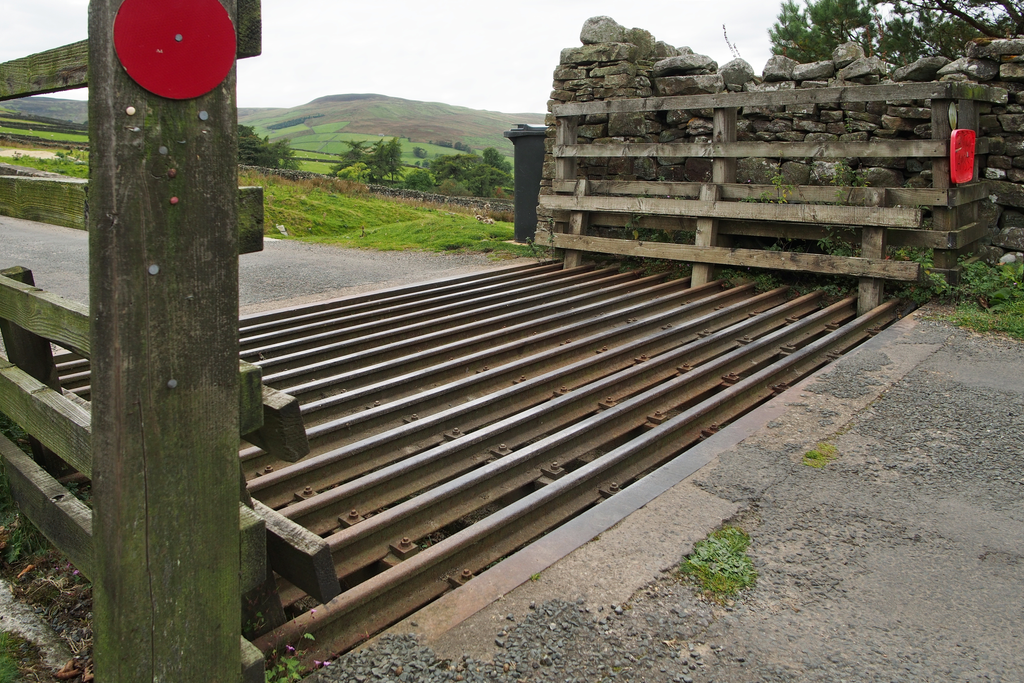
The gaps in between the each metal word is to make the cattles, for this novel the deers to be stuck in.
[In 675–676 AD, Emperor Tenmu issued Japan’s first official imperial decree banning the consumption of meat, initiating a cultural taboo against eating four-legged animals that lasted for nearly 1,200 years]